
The Supreme Court stated it has not approved any modifications to Form 6, used for electoral roll inclusion, during the Special Intensive Revision. This observation came during the hearing of a Public Interest Litigation (PIL) challenging alleged unilateral decisions by the Chief Election Commissioner regarding changes to Form 6 and electoral roll revisions in states like Goa and West Bengal, without the concurrence of his colleagues. The court issued notice on the plea, highlighting concerns over collective decision-making within the Election Commission.
A curative petition has been filed in the Supreme Court challenging the September 23 split verdict on the Chief Election Commissioner and Other Election Commissioners (Appointment, Conditions of Service and Term of Office) Act, 2023. The petition, filed by Jaya Thakur, alleges a "reasonable apprehension of bias" due to claims that Justice Satish Chandra Sharma's son is a standing counsel for the Election Commission, raising questions about judicial propriety.

The Supreme Court has agreed to hear a Public Interest Litigation (PIL) next week that seeks the suspension of Chief Election Commissioner (CEC) Gyanesh Kumar and challenges the alleged unilateral decision-making within the Election Commission without the approval of two other Election Commissioners.

The Supreme Court is examining the Election Commission's decision to allot the Shiv Sena's bow-and-arrow symbol to the Eknath Shinde faction. The court questioned the validity of relying primarily on legislative strength, particularly when MLAs face disqualification. Arguments from the Shinde faction defended the EC's test, while the court raised concerns about the "sentiment of the symbol" for defectors and the practicalities of assessing grassroots support. The hearing remains inconclusive.

The Supreme Court has sought responses from the Election Commission and Chief Election Commissioner Gyanesh Kumar regarding a plea filed by Congress leader Rahul Gandhi and 12 other opposition leaders concerning alleged large-scale voter deletions and Special Intensive Revision (SIR) irregularities.

The Supreme Court is set to hear a plea filed by Congress leader Rahul Gandhi and other opposition figures on Thursday regarding alleged large-scale voter deletions and irregularities in the Special Intensive Revision of electoral rolls. The petition seeks an independent audit of these deletions and modifications, and a direction to prevent further deletions without due process.

'Election Commissioners are Constitutional authorities and they are not supposed to go to the Cabinet secretary. They are not supposed to write letters. And if they are aggrieved, they should straight go to the President of India.'

Former West Bengal Chief Minister Mamata Banerjee has filed a plea in the Supreme Court challenging the Election Commission's interim decision to freeze the Trinamool Congress' name and party symbol. The EC had allotted separate names and symbols to two rival TMC factions ahead of upcoming bypolls, a move Banerjee has strongly criticised as a "black day" for democracy.

The Supreme Court has issued notices to the Election Commission and the Centre regarding pleas alleging that the poll body made several decisions without the approval of the two election commissioners. The court stated it would annul any decisions found not to be in accordance with the law, while also refusing an interim order to restrain CEC Gyanesh Kumar from making decisions.
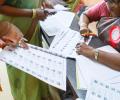
The Supreme Court will hear a plea on October 28 regarding the Special Intensive Revision (SIR) of Delhi's electoral roll. Petitioners seek transparency from the Election Commission on voter deletion reasons and a simplified re-inclusion process for those omitted, especially concerning Form 6. The court had previously raised concerns about "mechanical" notice issuance during the SIR, which led to 47 lakh voter deletions in Delhi.

The Election Commission replaced the inspector-in-charge of Nandigram police station, Ajay Kumar Mishra, with Debashis Sarkar a day before the bypoll, following complaints from opposition parties alleging Mishra's closeness to the ruling party. This move comes amidst heightened political scrutiny and concerns raised by opposition leaders regarding the fairness of the election process in Nandigram, a constituency with significant political history in West Bengal.

The Supreme Court is set to hear pleas challenging Chief Election Commissioner Gyanesh Kumar's alleged unilateral decisions without the concurrence of other election commissioners. The petitions seek his suspension and question actions like altering voter registration forms and handling electoral roll revisions in Goa and West Bengal, highlighting concerns over the multi-member character of the Election Commission.
The Supreme Court has dismissed a plea challenging the resignations of six AIADMK MLAs who subsequently joined the ruling Tamilaga Vettri Kazhagam (TVK). The court affirmed that resignation and disqualification are distinct constitutional processes, upholding the Speaker's acceptance of the resignations and stating that the Speaker was not required to inquire into motives.
The Supreme Court has questioned the Election Commission's decision to allot the Shiv Sena's bow-and-arrow symbol to the Eknath Shinde faction, asking if the possibility of denying the symbol to both factions was adequately considered. The court also raised concerns about using legislative majority as a test while disqualification proceedings against MLAs were pending. The Shinde faction argued for the validity of the legislative majority test, citing significant vote share and legal precedents.

The Supreme Court resumed hearing pleas challenging the Maharashtra Speaker's decision regarding the Eknath Shinde-led Shiv Sena MLAs and the Election Commission's recognition of the Shinde faction as the "real" Shiv Sena. Senior advocate Neeraj Kishan Kaul, representing the Shinde camp, argued that the EC has jurisdiction under Article 324 to examine a party's democratic character and organisational structure, especially when the Thackeray faction's constitution was not registered with the poll panel. He emphasised that the Shinde faction's case is based on a split within the political party, not just its legislative wing, citing cadre discontent. The hearing remains inconclusive.
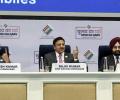
'One of the principles of the MCC that you should not make hate speeches and create hatred between communities on the basis of religion was violated on a scale that was never seen before.' 'Religious symbols were very liberally used and speeches were made to polarise people on the basis of religion.'

The Opposition India bloc has threatened to initiate impeachment proceedings against Chief Election Commissioner Gyanesh Kumar, citing alleged irregularities in the Special Intensive Revision (SIR) of electoral rolls. This move comes as the Opposition plans a joint agitation and highlights the constitutional process for removing a CEC, which mirrors that of a Supreme Court judge.

The Election Commission has provided a fresh opportunity for voters in seven states marked as Absent, Shifted, Dead, or Duplicate (ASDD) to be included in the final electoral rolls. This decision comes amidst allegations of disenfranchisement and aims to facilitate the inclusion of electors whose enumeration forms were not returned during the Special Intensive Revision exercise.
The Election Commission has removed an additional declaration related to the Special Intensive Revision (SIR) from the online voter enrolment Form 6 in states where the SIR process is complete. This decision follows internal objections from Election Commissioners Sukhbir Singh Sandhu and Vivek Joshi regarding changes to the form and the process. The EC maintains the declaration was SIR-specific and not an amendment to Form 6 itself.
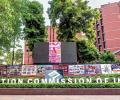
The Election Commission has clarified that its ECINet platform is decentralised, with statutory functions performed only by designated officials, not headquarters staff. This comes after concerns were raised about the centralisation of electoral roll databases. The EC also defended the legality of an additional declaration sought from new voters during the Special Intensive Revision, citing unanimous commission approval and a Supreme Court judgment.

Opposition parties, led by Rahul Gandhi and Mallikarjun Kharge, plan to march to the Supreme Court on Monday to meet the Chief Justice of India. They aim to submit a memorandum regarding alleged 'vote chori' and demand CEC Gyanesh Kumar's resignation, halting of SIR, and a return to paper ballots. The protest follows widespread detentions during previous demonstrations, which the opposition condemns as an assault on democracy.

The Bombay High Court in Goa ruled that provisions of the Representation of the People Act and Registration of Electors Rules remain in force during a Special Intensive Revision of electoral rolls. The court directed authorities to include six members of a Goa family in the voter list, criticising the Election Commission's system for rejecting Form 8 applications for residence change, stating it denied citizens their right to vote and amounted to suspending legal provisions.

Election Commissioners Sukhbir Singh Sandhu and Vivek Joshi reportedly flagged multiple issues during the Special Intensive Revision (SIR) of voter rolls, including name deletions. Despite a media report suggesting 14 objections over 10 months, Election Commission officials assert that all decisions, including SIR, were unanimous and approved by all commissioners. The report also highlights opposition parties' criticism of the SIR, alleging it targets non-BJP aligned voters.

Congress leader Rahul Gandhi urged CEC Gyanesh Kumar to resign and turn approver, stating the opposition's fight is against the "bigger powers" behind him.

Former bureaucrat Ashish Joshi has claimed that Delhi Police questioned him for nearly nine hours over social media posts concerning the Election Commission of India, and did not allow him to inform his wife about his whereabouts for several hours, alleging a "blatant violation" of Supreme Court guidelines.

The Election Commission of India has addressed reports of internal dissent among its commissioners and clarified that all Special Intensive Revision (SIR) orders and Form 6 updates for voter enrolment received unanimous consent and were upheld by the Supreme Court. The EC also announced measures to ease the process for voters issued notices, including doorstep document collection and extended deadlines in Delhi and Maharashtra, while affirming its commitment to transparent decision-making and meticulous compliance with directives.

The Supreme Court has issued notice to the Election Commission and its chief regarding a plea by Sanjay Raut and 12 others, including Rahul Gandhi, concerning alleged irregularities in electoral roll revisions. The court provisionally entertained Raut's petition but stated he would need to explain his conduct, while also addressing allegations of attempts to 'browbeat' the judiciary.
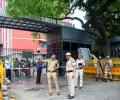
The article details a history of internal disagreements among Election Commissioners in India, highlighting instances from 1993 to the present, including clashes between CECs and commissioners over various issues like removal recommendations, dissent notes, and affidavits, culminating in recent objections regarding voter list revisions.

The Supreme Court has granted the Centre an extension until October 15 to file its response on petitions concerning the closure of metro stations and disruption of train services in Delhi during protests against Chief Election Commissioner Gyanesh Kumar and the Special Intensive Revision of electoral rolls. The court also deferred a crucial hearing, issued notice on a petition challenging the immunity of election commissioners, and sought a Delhi Police officer's presence regarding alleged assaults on women journalists. Earlier, the court had directed authorities to ensure normal public transport and prevent unlawful detentions.

The Supreme Court has sought a response from the Centre regarding the introduction of totalisers for counting votes recorded in Electronic Voting Machines (EVMs). The court wants to understand any impediments and potential negative impacts of this mechanism, which aims to protect voter privacy and prevent post-poll violence by counting votes from multiple booths together.

The Eknath Shinde faction informed the Supreme Court on Wednesday that Uddhav Thackeray's decision to form the Maha Vikas Aghadi government with the Congress and NCP in November 2019 departed from the Shiv Sena's core ideological platform. They argued that their dissent in June 2022 was an effort to restore the party's original identity, not an act of defection, and that the anti-defection law should not suppress collective dissent.

The Gauhati High Court has ruled that a PAN card and an Electoral Photo Identity Card (EPIC) alone are insufficient to establish Indian citizenship or family relationships without supporting records. The court upheld a Foreigners Tribunal's decision declaring a woman from Darrang district a foreigner, dismissing her writ petition. The ruling emphasizes the need for comprehensive documentation beyond these common identity proofs in citizenship cases.

The Supreme Court has intervened in the ongoing protests against the Chief Election Commissioner, seeking responses from the Centre and other parties while emphasizing that protest sites cannot be occupied indefinitely, impacting local businesses.
The Election Commission of India has announced decisions addressing concerns raised by two election commissioners, Sukhbir Singh Sandhu and Vivek Joshi, over the past 10 months. These issues included changes to voter registration forms, access to the electoral roll database, the handling of Goa's 97 voters, communications issued without full commission approval, oversight of the IT division, and appeals against voter restoration. The EC has provided responses and outlined steps to resolve these internal disputes and improve transparency and compliance.
The Supreme Court on Monday granted protection from arrest to psephologist Sanjay Kumar in connection with two FIRs lodged by the Election Commission of India accusing him of spreading misinformation over Maharashtra's electoral rolls through posts on social media.

The Congress party has demanded the resignation of Chief Election Commissioner Gyanesh Kumar, alleging "vote chori" and treason, following a media report revealing that two other Election Commissioners had formally objected to decisions regarding the Special Intensive Revision of electoral rolls. Rahul Gandhi and Mallikarjun Kharge have accused the BJP, RSS, and EC of undermining democracy, citing concerns over voter list tampering and lack of transparency.

Supreme Court Justice B V Nagarathna has emphasised the critical importance of an independent Election Commission to ensure the neutrality and integrity of the electoral process in India.

A group of 124 former IAS, IFS, IPS, and allied services officers have issued an open letter defending the Election Commission (EC) and the Special Intensive Revision (SIR) process. They argue that the electoral system cannot be deemed rigged only when a party loses, citing instances where the ruling BJP lost elections under the same EC. The officers highlight the legitimacy and necessity of the SIR for cleaning voter rolls and underscore the robust safeguards within India's electoral system.

The Supreme Court on Sunday directed that people gathering peacefully should not be illegally detained and issued a notice to the Centre regarding alleged violations of its earlier order during a CJP protest in Delhi. The court also asked the Solicitor General to ensure normal metro services and no internet disruption, while addressing concerns about widespread detentions and transport closures.
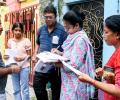
The Supreme Court has directed the Election Commission to provide details on the disposal of appeals by tribunals concerning deletions from West Bengal's electoral rolls during the Special Intensive Revision (SIR). The court emphasised the need to track the progress of these appeals, which were set up to address irregularities. It also clarified that grievances regarding the denial of PDS benefits due to voter deletion should be taken up with the Calcutta High Court.
